
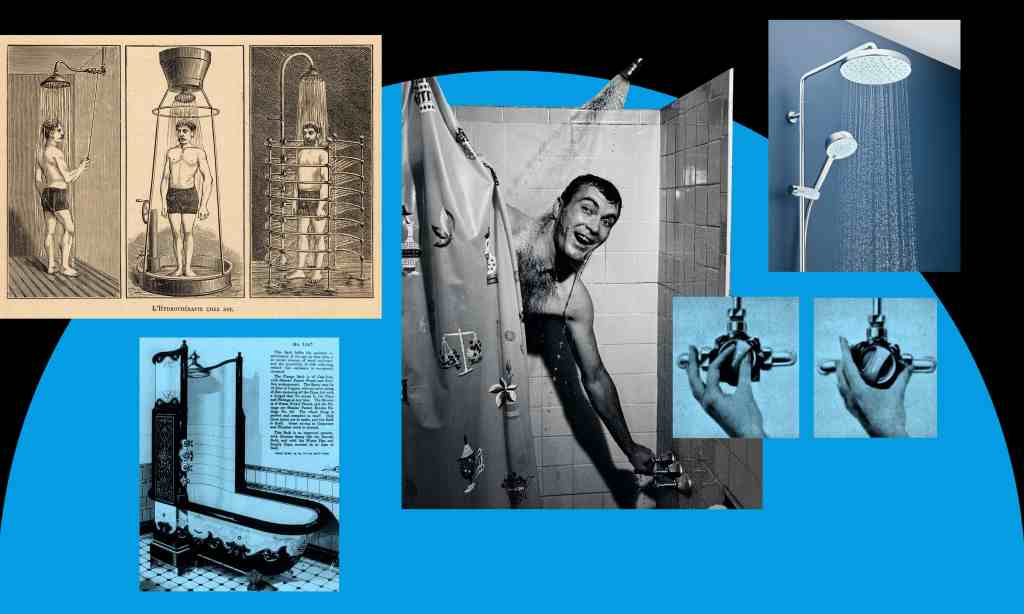
In an article by Abi Smith featured in The Guardian, our own Giacomo Savani shares his knowledge of ancient showering practices.
Water, water, everywhere – how we fell for the power of the shower
Ancient Egyptians prized them, long-suffering medieval patients were less keen. The popularity of showers may have ebbed and flowed through the ages – but now they’re here to stay – by Abi Smith
Whether our ancestors stood under waterfalls or poured jugfuls of water over their heads, the pleasure of taking a refreshing shower is something humans have delighted in for thousands of years. Evidence of waterfall ablutions has long been washed downstream but history throws up many tantalising insights into how we progressed from public bathing to the sophisticated showers of today.
Incredible as it seems, it’s only in the past 50 years that many people in the UK have been able to shower at home, yet wealthy ancient Egyptians were enjoying that luxury thousands of years ago. Excavations of palaces around the Nile have uncovered the remains of shower rooms where a bather could stand on a slab of stone with a drain while they, or a servant, poured water over their head.
The Romans too, although better known for their love of baths and bathing, knew a thing or two about showers. “The Romans definitely preferred a good bath, but showers with thermo-mineral water are mentioned in ancient medical texts,” says Dr Giacomo Savani, a Marie Curie Fellow at Ca’ Foscari University of Venice, who specialises in the cultural and social role of bathing. “The customers of the Roman spa at Bourbon-Lancy, in the Saône-et-Loire department in central France, might have enjoyed such treatment,” he says, “as suggested by the discovery of pipes in the upper parts of some of the baths’ walls.”
Since those early times, interest in the curative powers of water has never really gone away. “In the late middle ages and the early modern period, showers were one of the treatments that doctors in Italy prescribed for their patients visiting a spa,” says Savani, describing a raised shower bucket from which water could be directed on to the head or the shoulders. “Sometimes, patients wore wooden helmets with holes, perhaps to reduce the impact of the jet. The procedure must have been rather unpleasant, as many complained, including Federico Gonzaga, Marquis of Mantua, who said that every hour-long session seemed a thousand times longer.”
It’s clear that showers have not always been the blissful experience we expect today. The Royal College of Physicians of Edinburgh mentions in an article that 18th-century prescriptions could include shower bathing or, as one recipient wrote: “Cold bath of pails of water thrown upon me from head to foot.”
The first patented shower was reportedly invented in the 18th century by William Feetham, a stovemaker from Ludgate Hill in the City of London. It is said that the device involved using a hand pump to send cold water to a tank above the bather’s head, which then fell through holes before being recirculated – and so the trickle of an idea was born. But it wasn’t until 1872…
Read further on the Guardian website: https://www.theguardian.com/mira-innovators-in-showering/article/2024/jun/21/water-water-everywhere-how-we-fell-for-the-power-of-the-shower
Courtesy of Guardian News & Media Ltd
 BATH – BAlnea & THermae
Leave a comment