
What is left of a private bathing suite belonging to a large villa was recently brought to light in the south of Autessiodurum (Auxerre), France.
The area was first excavated in the 1960s, when a 700 m² building was discovered. More recent excavations, conducted by the National Institute for Preventive Archaeological Research (Inrap) in the context of the creation of a train line, revealed how that building was only a secondary wing of a much larger villa, uncovered for more than 4,000 m².
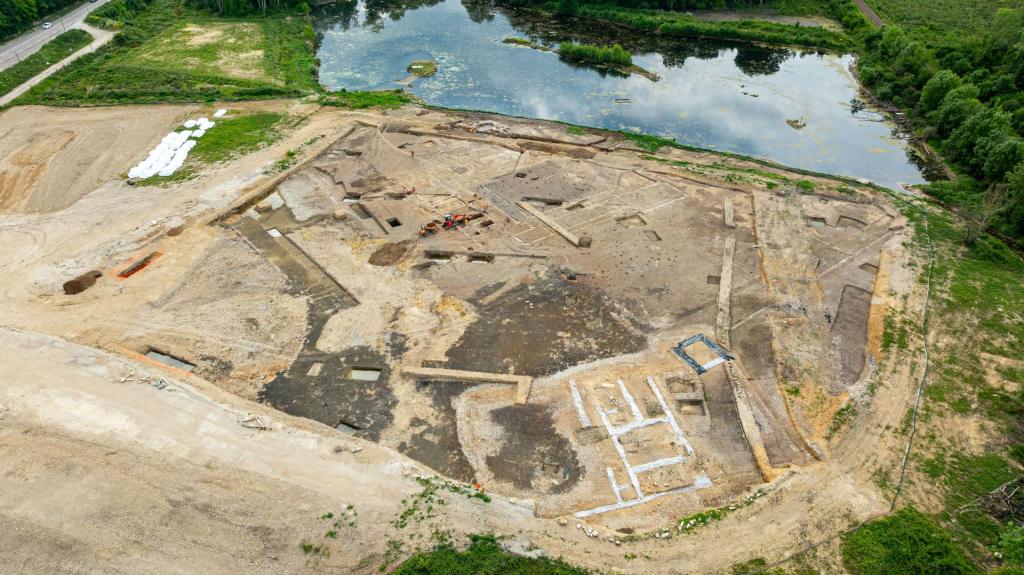
The pars urbana of the villa was organised around a 450 m² garden framed by a rectangular basin to the north and a small fountain to south, and surrounded by porticoes opening onto reception rooms and other spaces. Part of the pars rustica was brought to light to the west.
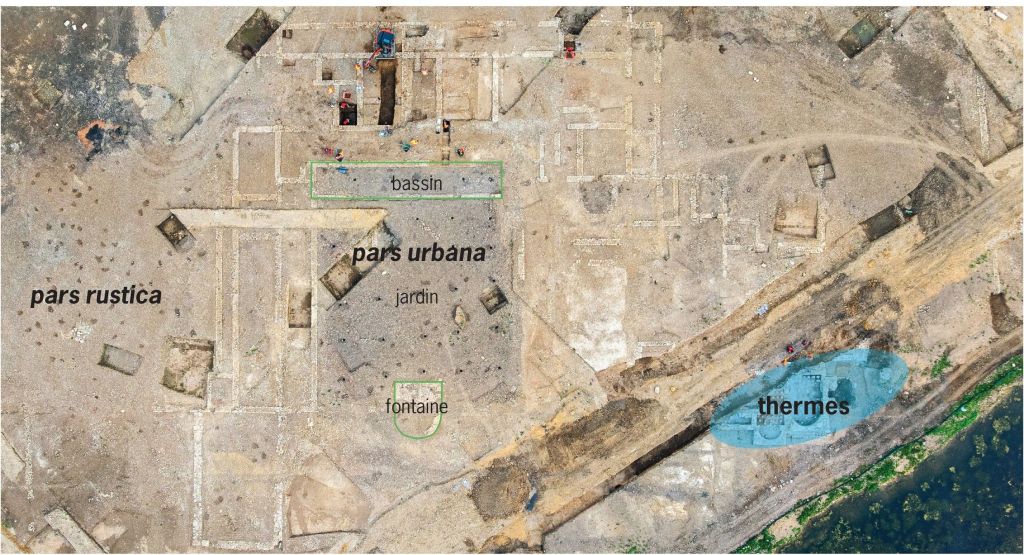
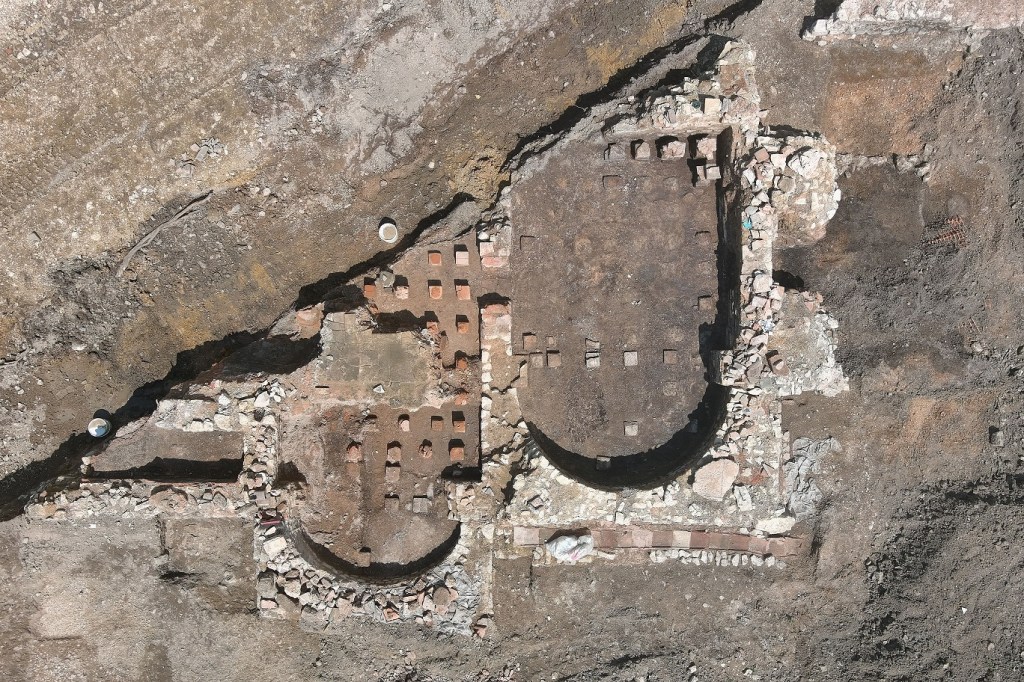
The baths themselves are located in the eastern wing of the villa. All the cold rooms are lost, cut by a large trench, but the visible remains reveal two rectangular rooms equipped with segmental niches and heated by hypocaust—probably the caldarium and a tepidarium—with their corresponding furnaces.
The walls are made in the ‘petit appareil’ of small rubble stone common in the area, the pilae are made of brick and are probably bessales, and traces of tubuli in the wall plaster indicate that the walls were heated too. A drainpipe made of tegulae allowed the water of the pools to be evacuated outside the building.
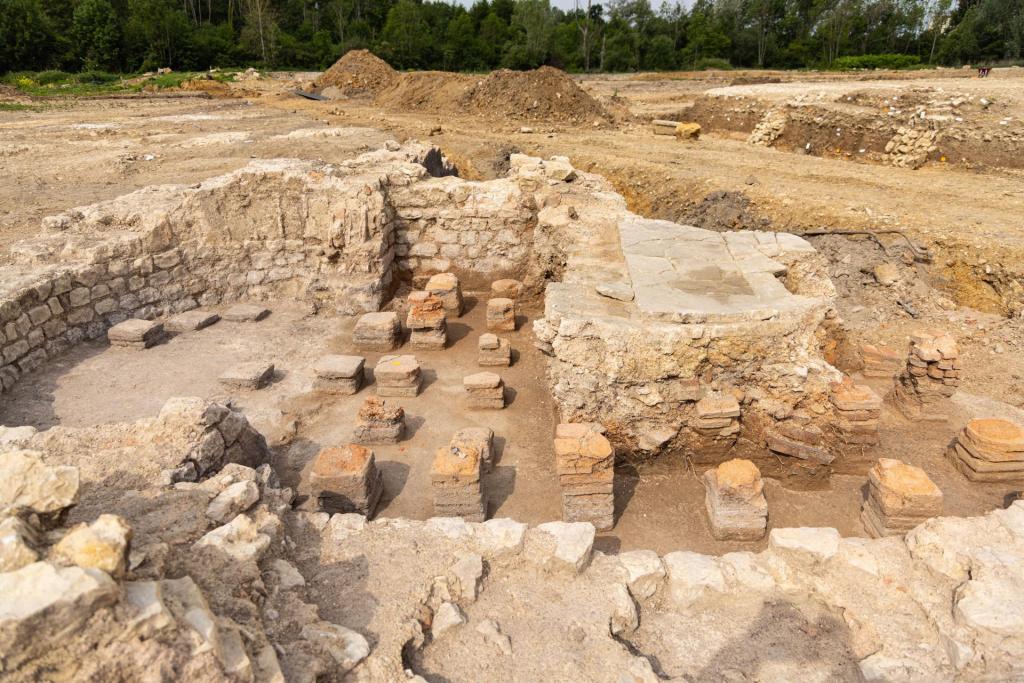
The material found during the excavations of the villa indicate it was occupied from the 1st until the 4th c. AD. Based on their shape and the presence of segmental niches, these baths could have been built at any point in the first half of that period.
The announcement of the discovery was published on the website of the Inrap.
Pictures credits: Ch. Fouquin, Inrap // J. Berthet, Inrap
For all technical, bath-related terms, see the BATH glossary.
 BATH – BAlnea & THermae
Leave a comment