
A few months ago, a new article was released in the journal Levant, publishing a Hellenistic bathing unit and a Roman fountain house from a sanctuary at Tel Dan (northern Israel): Ritual purity among the Phoenicians in the sacred precinct at Tel Dan in the Hellenistic and Roman periods by Levana Tsfania-Zias. The study recognizes two new water features dated to the Hellenistic and the Roman period within a sanctuary precinct, whose restructuring phases were re-dated to the Classical periods (Persian to early Byzantine periods) from the original excavators’ dating to the Iron Age during preparation of the final excavation report.
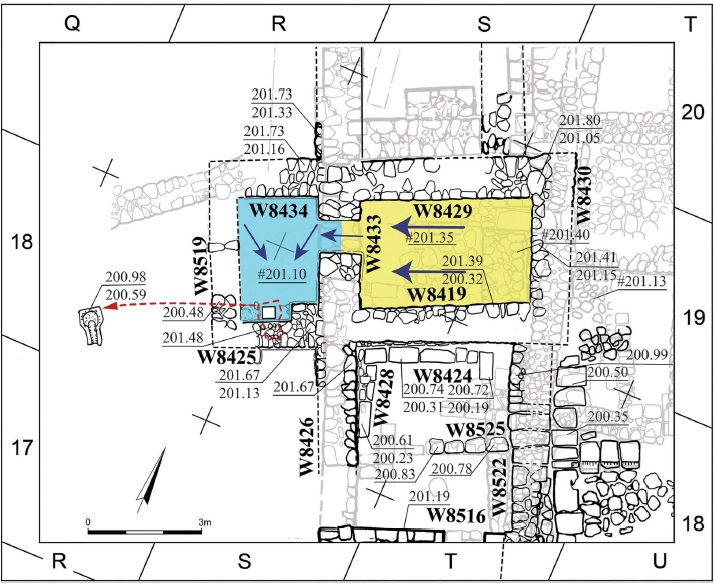
The Hellenistic-period water feature is a bathing unit of Phoenician style, suitable for shower-like cleaning with water poured onto a waterproof floor from an auxiliary vessel, recognized based on parallels collected previously in another article that brought forward the presence of Phoenician-style bathing facilities in the Hellenistic southern Levant. While the article by Kathleen Birney identified three bathing rooms inside houses used for hygienic cleaning, the bathing unit at Tel Dan is proposed to have been a ritual facility, located within a sacred compound and used by priests of the sanctuary for cleansing before entering the temple.
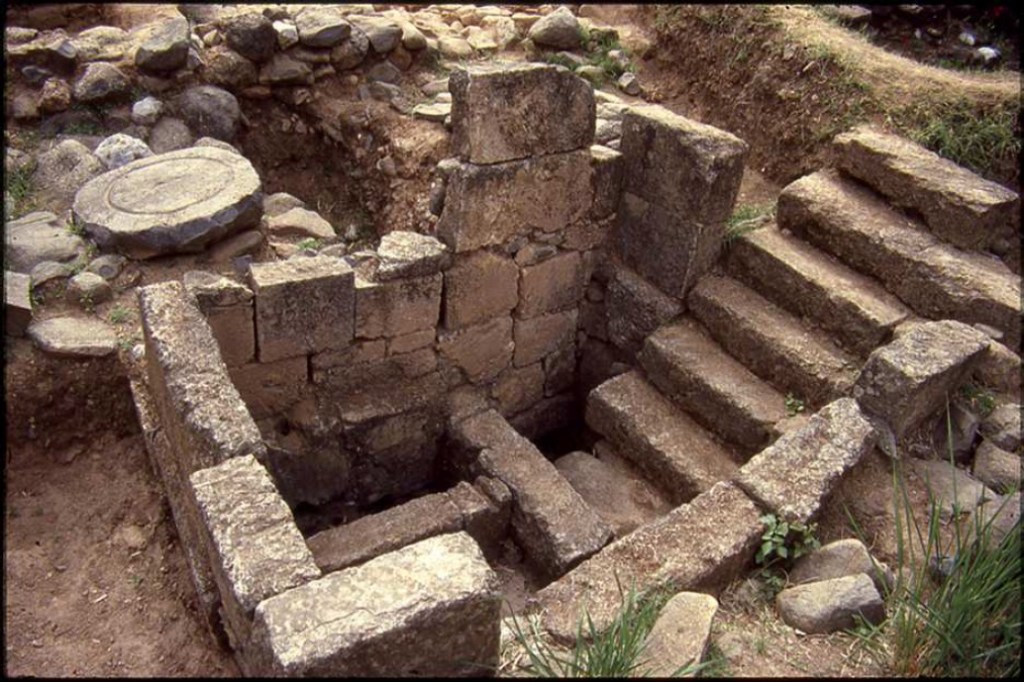
The Roman-period water feature is a simple fountain house, with a few steps descending from the street level down to two plastered draw basins that were supplied with water by a clay pipeline from a nearby spring. With the finds of many fragments of bowls inside the fountain house, the article interprets the fountain as a drinking station and ritual handwashing and footwashing facility for the pilgrims of the nearby sanctuary. It would make sense for a bathhouse for fully body cleaning to be located not far from the sanctuary too, to be used by the pilgrims to refresh after their journey and by the local inhabitants that supported the sanctuary, but such a facility has not yet been identified at Tel Dan.
The article presents a series of evidence and arguments supporting the interpretation of the two described features, allowing other scholars to assess the validity of the proposed interpretations. In all, this publication is of significant interest for the discussion on recognition of Phoenician-style bathing as a separate cultural trait, different from the Greek-style bathing that included hip-baths or immersion tubs. It also can serve as a starting point for discussing water use and special bowls in the sanctuaries of the Roman Near East.
 BATH – BAlnea & THermae
Leave a comment