
The Parco Archeologico di Ercolano announced the exceptional opening to the public of the Suburban Baths. During the weekends from September 14 until November 1, visitors to Herculaneum will have the possibility to purchase an additional ticket to enter the Suburban Baths with a guided tour, and will have access to rooms that had never been made accessible before. The building has been the object of a restoration campaign in the previous years; work is still ongoing, but the progress is substantial enough to offer a view of the splendour of those baths, and of an ongoing restoration site.

The baths, accessible to the public, had been paid for and offered to the city by Marcus Nonius Balbus, a member of a prominent family from Nuceria who ended up being one of the most generous benefactors of Herculaneum (he also paid for the construction of the basilica and for works on the city walls). He was a contemporary and support of Octavian, and held charges of tribune of the plebs in 32 BC, praetor, and proconsul of Crete and Cyrenaica. His generosity was later rewarded by the city of Herculaneum with a series of honours after his death, including an equestrian statue displayed near the basilica (and now in the Archaeological Museum of Naples), as well as an altar bearing a statue in his effigy and an inscription in his honour on the platform in front of the baths—the inscription is still in place.
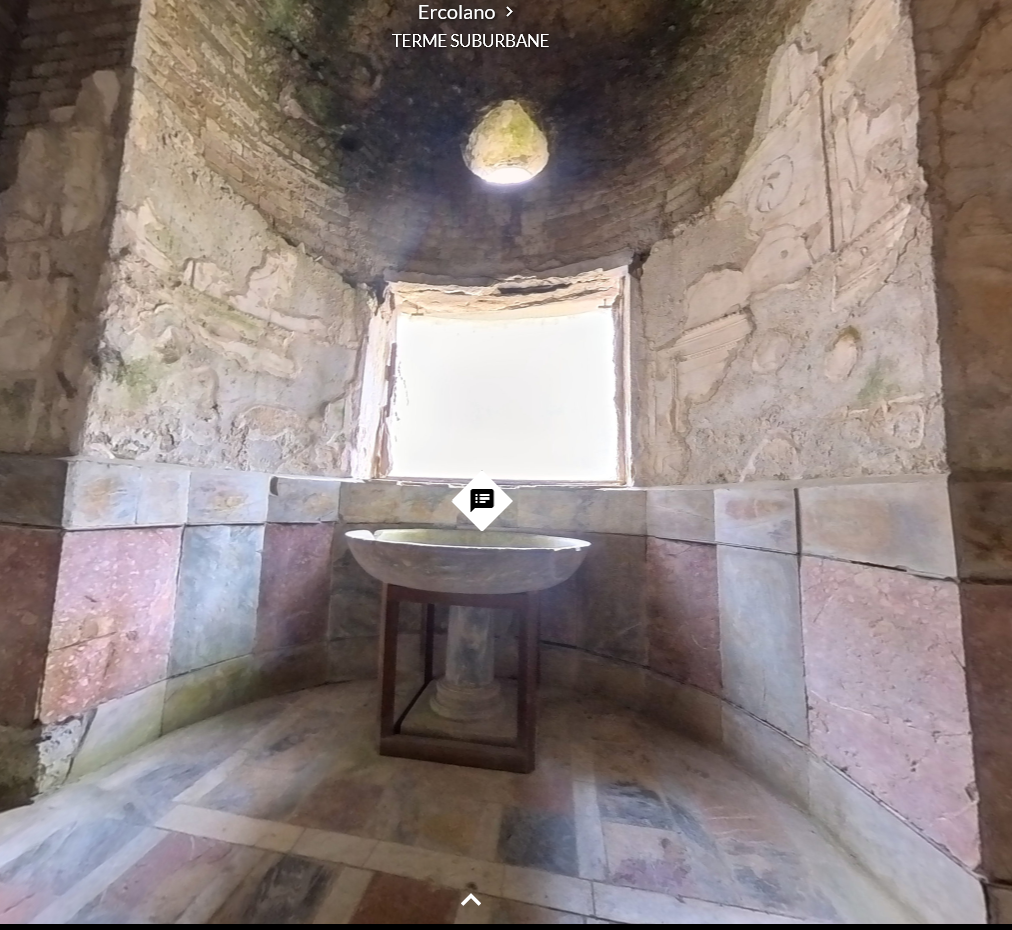
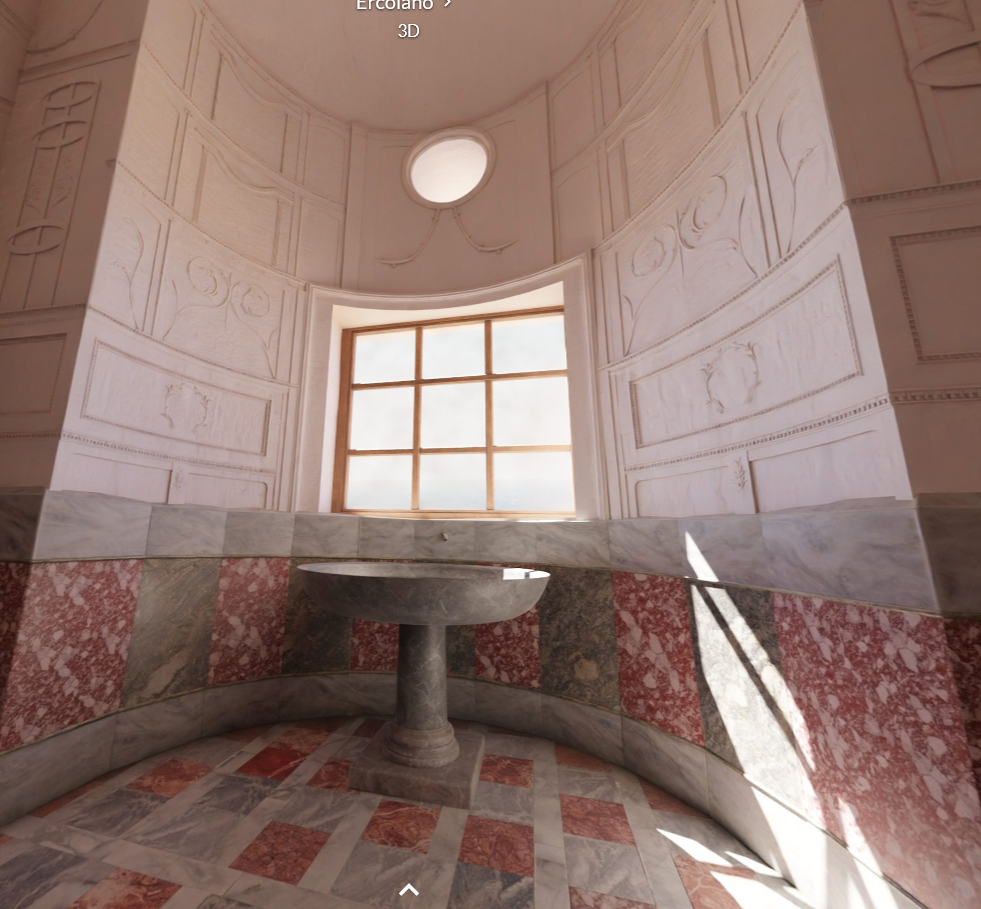
The southern niche of the caldarium with the labrum. The situation before the restoration, and a 3D model reconstructing its original state. Note the window with glass panes, remains of which were discovered during the excavations (Parco archeologico di Ercolano).
The baths are worth a visit on several accounts. They are exceptionally well-preserved, with all vaults and roofs still in place, as well the details of the rich marble and stucco decoration, and the heating system. They also boast one of the rare examples of a samovar, a large bronze device placed in the floor of a heated pool to keep the water warm. In a small service room right after the entrance, a stack of tubuli was deposited, probably awaiting to be used in the wall heating system in replacement of the tegulae mammatae—an upgrade of the heating technology that would have allowed to keep the rooms at a higher temperature using less combustible.
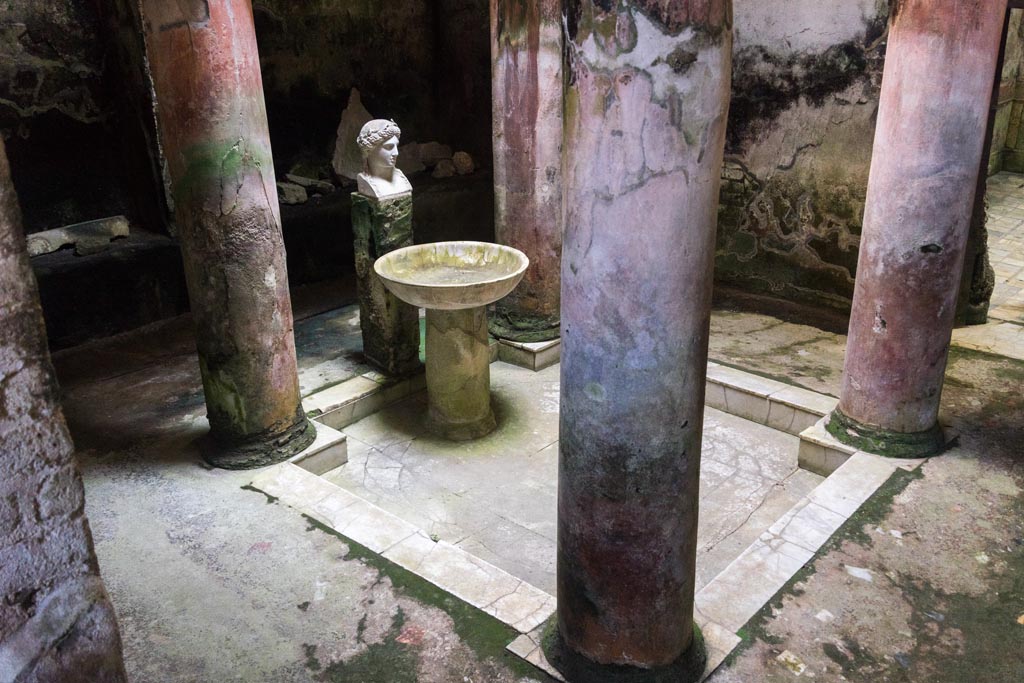
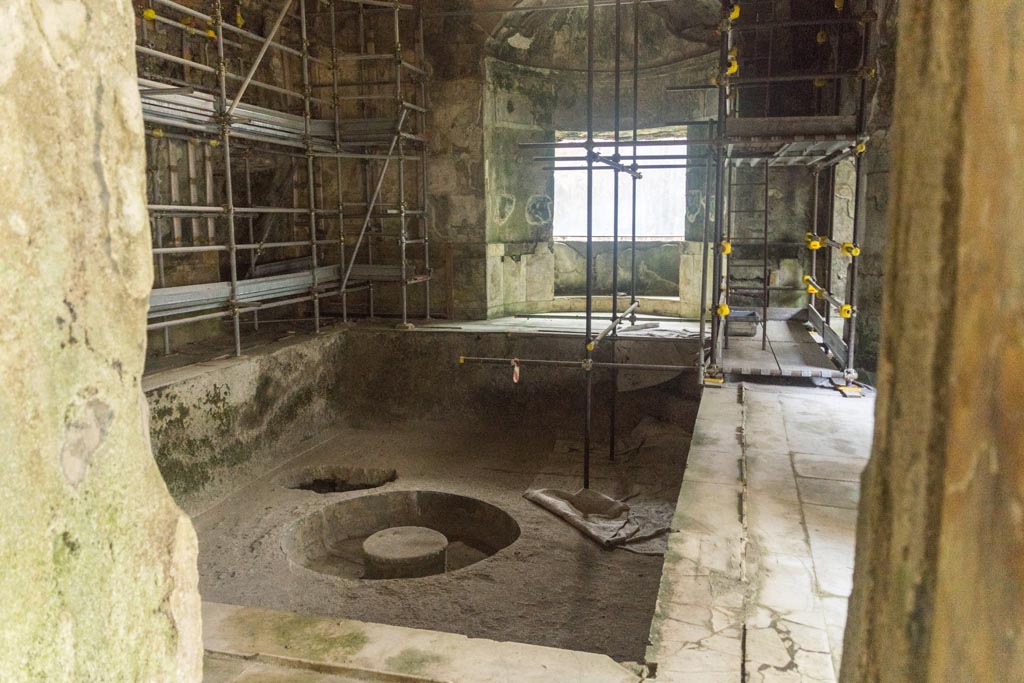
Those who cannot make it to Herculaneum before November will find some solace in being able to explore the city through its high-resolution 3D scan. The Suburban Baths themselves have a dedicated model that allows users to explore all rooms, including those closed to the public. You can also let yourself get taken along a video guided tour inside the baths. Finally, the virtual tour of the site also offers 3D views of several rooms of the baths (and other buildings), as well as reconstructions of their original state.
More information on the website of the Parco Archeologico (here and here), and tickets available on Coopculture.
All words in bold are defined in the glossary.
 BATH – BAlnea & THermae
Leave a comment