
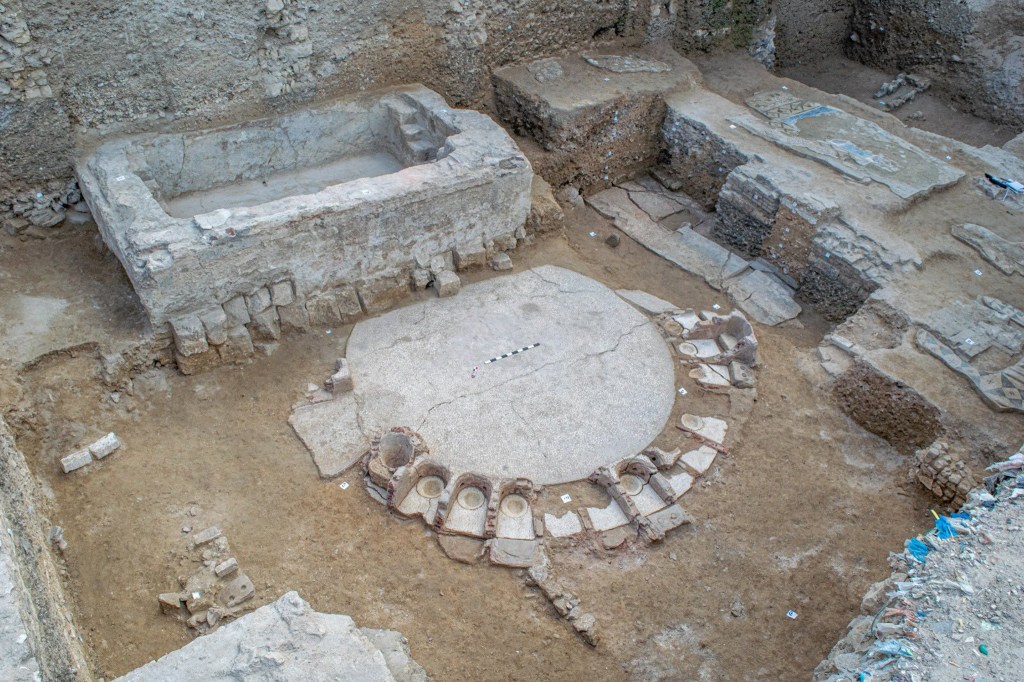
Excavations in the centre of Alexandria have brought to light the remains of a Ptolemaic-period tholos bath and a Roman villa. The discovery, announced by Egypt’s Ministry of Tourism and Antiquities, was made in the Moharam Bek area, which constituted the southeastern part of the ancient city.
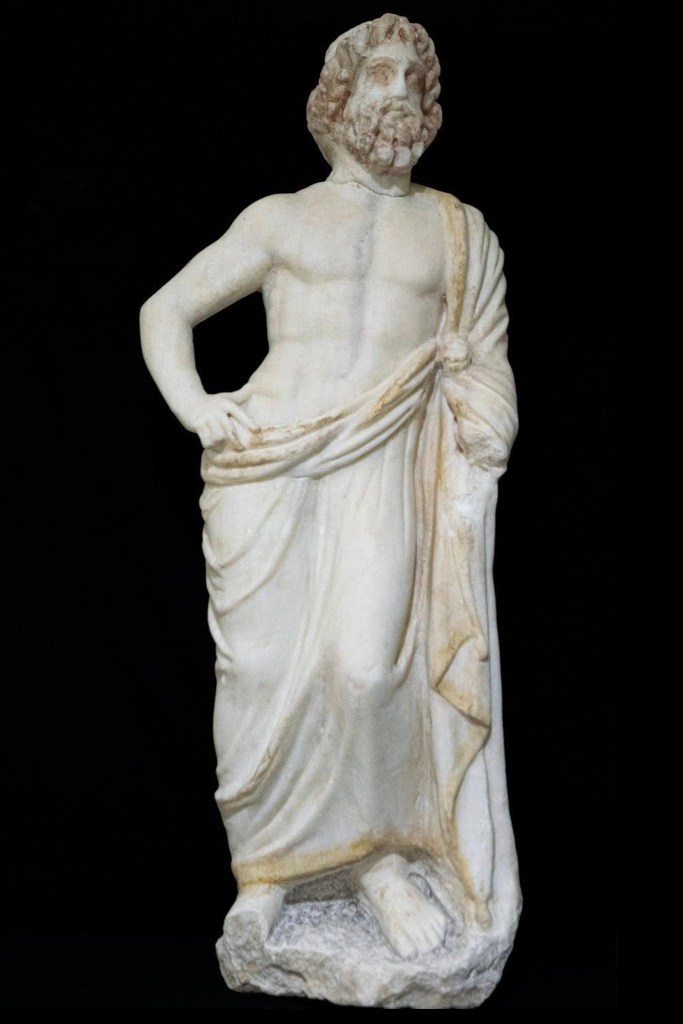
The circular tholos contained fourteen hip-bathtubs, and was later covered by the villa that included an immersion pool as well as mosaic and opus sectile floors. Archaeologists also uncovered several marble heads and headless statues, including representations of Bacchus and Asclepius. The trench revealed a clear chronological sequence from the Ptolemaic period through the Byzantine era, highlighting the continuity of occupation in this peripheral part of the ancient city.
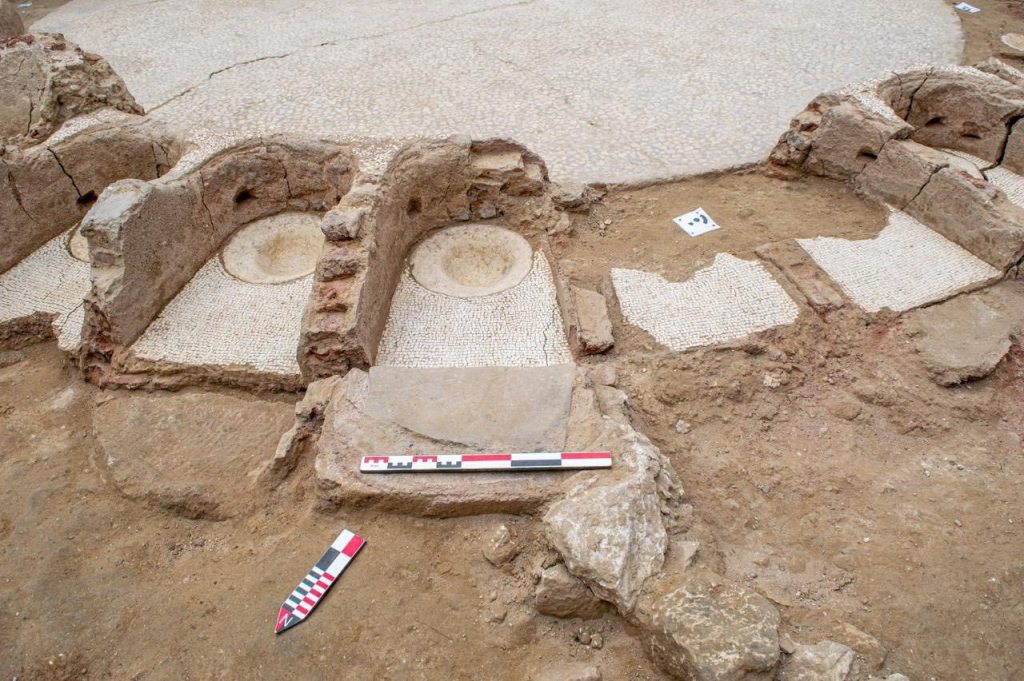

Tholos baths such as those were not uncommon in Egypt, and tended to be used much longer than in other parts of the Greek world, sometimes well into the Roman imperial period (Fournet & Redon 2017). The thermal culture of Egypt has been particularly well-studied, in large part thanks to the Balnéorient program (2003–2014) which documented a continuity of bathing practices from their introduction in the Ptolemaic period through the Byzantine era, and beyond into the Islamic period with the hammam tradition.
Alexandria, in particular, exemplifies this continuity. Beyond the recently discovered structure in Moharam Bek, baths are known from all periods, from the Ptolemaic era (in the Cotarelli grounds, equipped with one or perhaps two tholoi, catalogue I C1), to the High Empire (beneath the thermae at Kom el-Dikka, catalogue III C51), into late Antiquity (the Kom el-Dikka thermae, 4th–5th century, catalogue III C50 and recently Kordas 2021).
The baths of Egypt have been exemplarily studied and presented in the two volumes of the Balnéorient project, ‘Le bain collectif en Égypte’ (2009) and ‘Collective baths in Egypt 2’ (2017).
The catalogues of the baths of Egypt published in these volumes are available on the HAL open archive:
- I: Greek tholos baths of Egypt
- II: Small Greek baths of Egypt
- III: Roman and Byzantine baths of Egypt
See also this catalogue of Greek Baths, 2013
Source and illustrations credits: Egypt’s Ministry of Tourism and Antiquities


Leave a Reply