
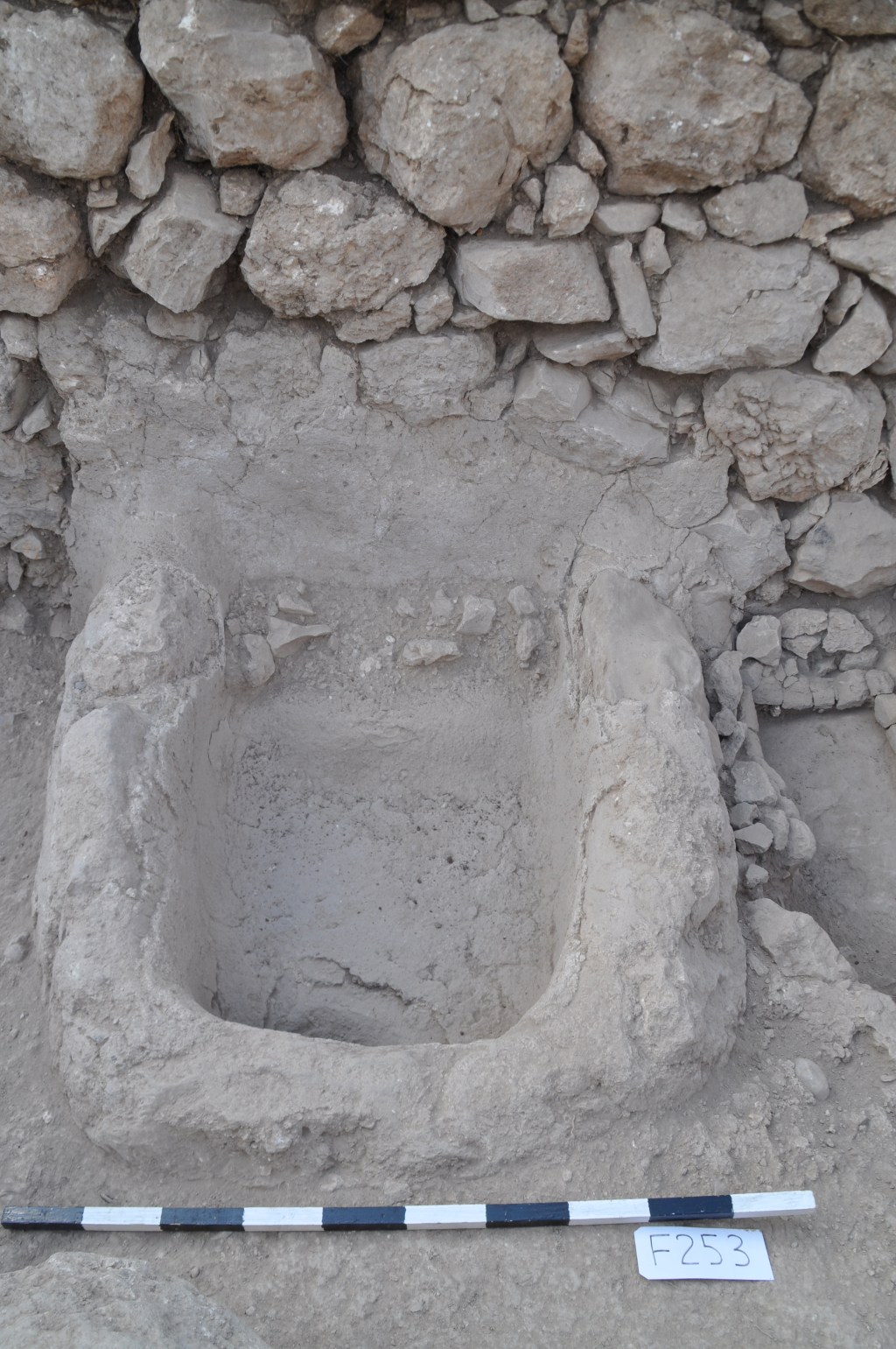
Dr Arleta Kowalewska, a research fellow at the Zinman Institute of Archaeology of the University of Haifa and a founding member of the BATH Network, has just published an article summarizing the state of research on bathing in the Hellenistic southern Levant. The article is a part of a volume titled Seleucid Nysa-Scythopolis in the Framework of Hellenistic Foundations in the Levant edited by prof. Achim Lichtenberger and prof. Oren Tal, which explores the phenomenon of Hellenistic foundations in the southern Levant and the wider Eastern Mediterranean. The volume, including the article on bathing, can be downloaded in open access from the site of the publisher, Zaphon.
Abstract: As with many other aspects of Hellenistic material remains in the southern Levant, remnants of the bathing culture are scarce, having been almost fully lost or hidden under the much more pronounced Roman, Byzantine, and Islamic-period phases. Nevertheless, through a detailed look at the archaeological evidence and its comparison with that of the surrounding regions, it is possible to reconstruct three leading traits of the bathing culture that characterized the southern Levant throughout the Hellenistic period. The first is the Greek-style bathing, which was part of the “global Hellenistic” culture known from Ptolemaic and Seleucid territories alike. It comprised two types of bathing facilities – the private and the public. While private bathing, in sitting or immersion tubs, is attested in the region, the public component ‒ tholoi with multiple sitting tubs and loutra in gymnasia – is barely visible in the excavated material remains. The second trait, coming from the Phoenician coastal cities where it had continued from the Persian period, comprised representative plastered rooms in urban and rural houses where cleansing was done mainly standing, with the water being manually poured over the bather. These rooms find parallels around the Phoenician world where they are also often influenced by Hellenistic fashion. The third trait is Jewish, characterized by full immersion bathing. While the idea of large open-air pools for swimming is of Greek origin, the Hasmoneans developed a unique feature for immersion bathing ‒ a deep pool with no drainage and one side occupied by steps descending to its bottom ‒ used for ritual immersion. In general, the southern Levant in the Hellenistic period is characterized by private bathing facilities, and no direct influence of the Hellenistic foundations is evident among the archaeological finds. The most significant development in bathing culture brought by the Hellenistic period is visible in Jewish society with the establishment of ritual immersion bathing in stepped pools.


Leave a Reply